
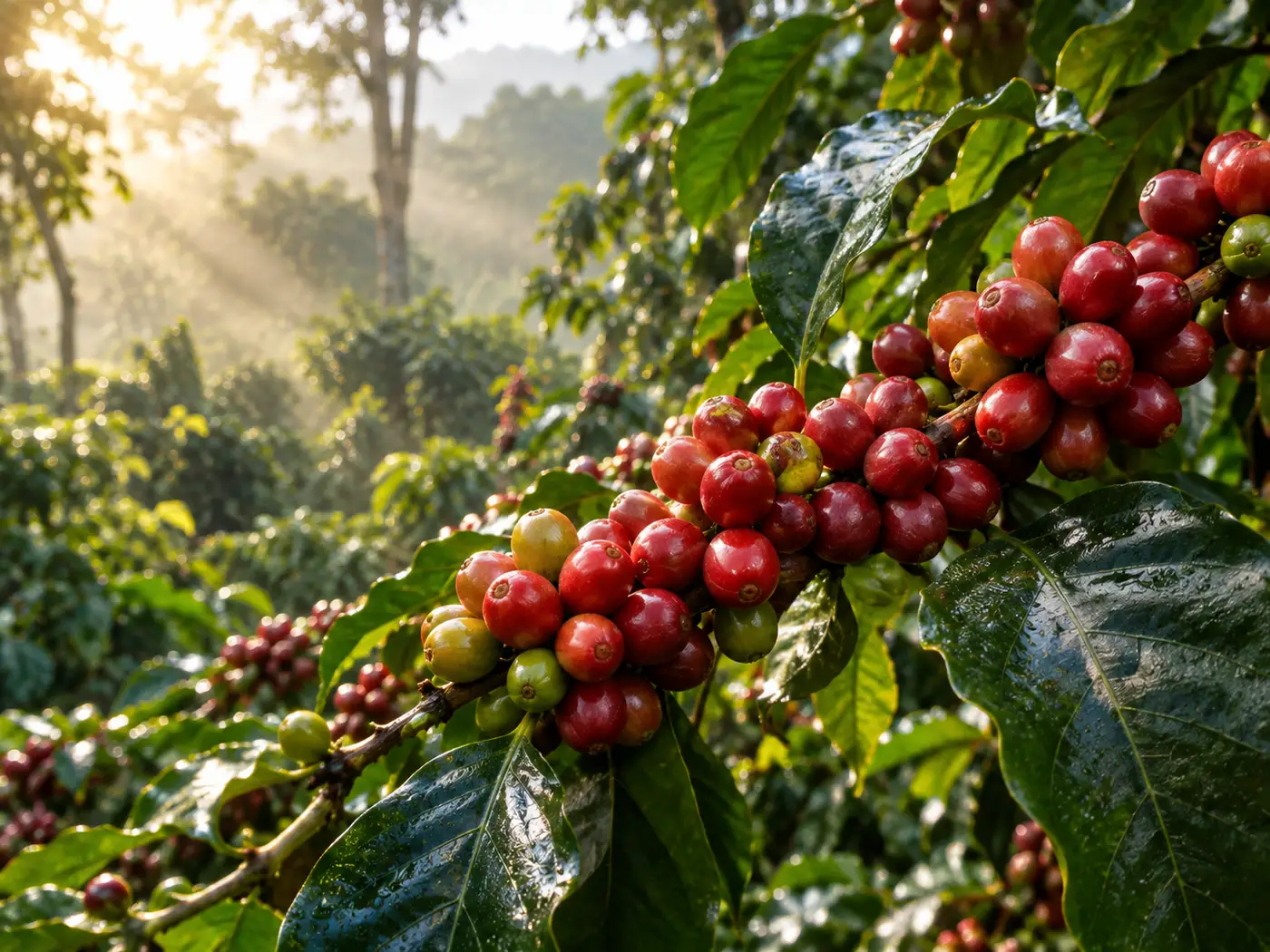
Ask most coffee lovers to name a great coffee origin and you will hear Ethiopia, Colombia or Kenya. Uganda rarely makes the list, yet it is one of the most important coffee countries in Africa, and the natural home of one of the world's two main coffees. Ugandan robusta has a story worth knowing, and a flavour worth trying.
Robusta's roots are in Uganda
Robusta (Coffea canephora) is native to the forests of central and western Africa, and Uganda sits right in the middle of its natural range. Wild robusta still grows in some of the country's forests today. Long before coffee was a crop here, it was part of the landscape.
That matters for two reasons. First, robusta is at home in Uganda's climate and soils, with no need to be coaxed into growing somewhere it does not belong. Second, the wild plants are a living library of robusta's diversity, which is valuable for the future of the crop.
A country built on coffee
Coffee is one of Uganda's most important exports, and most of the coffee grown here is robusta. Much of it comes from smallholder farms, often a few acres of coffee grown alongside bananas and other crops, picked and sold by families who have farmed the same land for generations.
Uganda also grows arabica on its mountain slopes, which makes it one of the few countries producing both coffees at scale. You can read more about how the two differ in our guide to Ugandan robusta vs arabica.
"Isn't robusta just for instant coffee?"
It is a fair question. Robusta is hardy and high-yielding, so a lot of the world's robusta is grown for volume and ends up in cheap instant coffee and budget blends. That is where its reputation for harsh, rubbery bitterness comes from.
But that reputation says more about how coffee is grown and handled than about the plant itself. Arabica can taste flat and dull when it is treated carelessly too. When robusta cherries are picked ripe, sorted properly and processed with care, the result is a very different cup: smooth, deep and naturally sweet.
What good Ugandan robusta tastes like
- Dark chocolate and roasted nuts, the backbone of robusta's flavour.
- Low acidity, so the cup is smooth rather than sharp.
- Heavy body, a rich, mouth-filling texture.
- Thick crema when brewed as espresso.
- Ripe fruit and sweetness from natural processing.
That last point is important. Most of our coffee is natural-processed: the cherries are dried whole, in their skins, before the beans are removed. The fruit's sugars have time to influence the bean, adding sweetness and fruit notes on top of robusta's chocolatey base. It is a profile that stands out from the crowd.
Why the best espresso blends use robusta
Many of the classic espresso blends of Italy include robusta, and for good reason. A share of robusta gives an espresso more body, a thicker and longer-lasting crema, and a chocolate depth that cuts through milk. It also adds caffeine: robusta has roughly twice as much as arabica.
That is exactly how we use it. Our Espresso Blend is 60% arabica and 40% robusta, balanced and versatile, with honey sweetness, apple zest and chocolate. Our Barista Blend goes further, half and half, for a bold, full-bodied cup that holds its own in a latte or flat white.
How to enjoy Ugandan robusta
- As espresso: where robusta's body and crema shine brightest.
- With milk: lattes, cappuccinos and flat whites, where a lighter coffee would disappear.
- In a cafetière or moka pot: for a strong, rich cup at home.
- Over ice: robusta's bold flavour holds up well in iced coffee and cold brew.
From its home to your cup
We have worked with Ugandan coffee since 2015, first as a green coffee exporter and, since 2018, from our own factory in Kampala. Every Orocafe coffee is sourced, roasted and packed in Uganda, so the value stays in the country where it is grown.
If you have only tasted robusta in a jar of instant, it is time to try it as it should be. Shop our coffees and taste the difference.
Looking for a distinctive origin for your own coffee brand? Ugandan robusta and arabica give you real range to build on. Find out about our private label service.